
You're back from the conference. Now what?

Practical advice for turning conference momentum into something that lasts.
You've made it through the week. You're exhausted, overstimulated, feeling connected, motivated, and your phone is full of photos of slides you took for reasons you're already starting to forget.
The conference high is real. So is the crash that follows.
In our previous post, we talked about how to prepare for a conference with intention: knowing your "why," doing your homework on who's there, managing your energy. This is Part 2: what to do when you get home.
Simply attending a conference is valuable - connecting and being inspired by a network of like-minded people is important. To feel like a human with purpose can refill a lot of cups but the long-standing value of attending comes from the choices you make in the weeks after.
Consolidate before you forget
Your first job when you get back is to get everything out of your head and into one place. Business cards, HiHello profiles, scribbled notes, half-remembered conversations, that person whose name you can't quite recall but who works on something relevant.

Go through your business cards. If you can't remember who someone is or why they gave you their card, let it go. For the ones that matter, add them to your contacts with a note about what you talked about or what you want to follow up on.
Review any notes you took - from talks, from conversations, from those late-night dinner table ideas that felt brilliant at the time. Some of them still will be. Others won't. That's fine.
What you're aiming for is a short, prioritised list of people to contact and things to follow up on. Not a sprawling to-do list that makes you feel overwhelmed before you've even started.
Prioritise with two filters
Not everything on that list is equally urgent or equally important, and you don't have time to follow up on all of it this week. Two filters help:
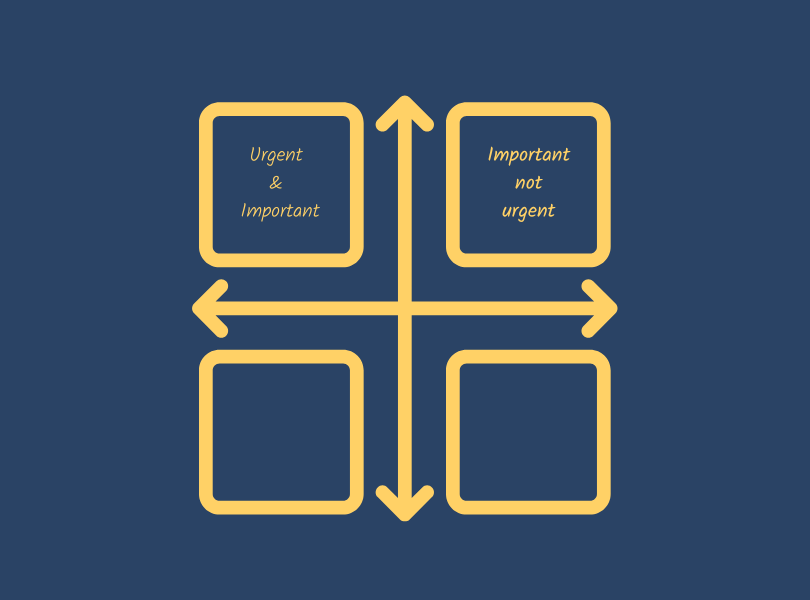
Filter 1: Is it time-sensitive? Have you been invited to contribute to a paper? A proposal with a deadline? A job that's closing soon? Anything with a ticking clock goes to the top.
Filter 2: Is it important? Of the time-sensitive things, which ones actually matter for where you're trying to go? And of the things that aren't urgent, which ones could open doors if you follow up now rather than letting them drift?
For every follow-up, get clear on what the point of it is. Are you continuing a conversation to build a longer-term relationship? Is there a specific project, proposal, or idea you want to explore? Everyone is busy after a conference. Following up with intention and a clear purpose is what separates your email from the thirty others in their inbox.
Be direct about what you're looking for

If you want to build a longer-term relationship with someone you met, start by asking yourself what kind of relationship you're actually hoping for. Do you want them as a mentor? A collaborator? A peer in a similar space? Do you want to become part of their research group?
And then - and we know this takes courage - be honest with them about it. Don't keep them guessing about what your objective is. Something like: "I'd really value your perspective on [specific thing] as I navigate this stage of my career - would you be open to staying in touch?"
It's putting yourself out there. It's vulnerable. But in our experience, honesty and directness land far better than vague "let's keep in touch" messages that neither person follows through on. Be gracious about it - acknowledge that people are busy, that it may not be possible, and think about what value you can bring to the relationship too. It shouldn't feel one-sided or extractive.
Reflect on your "why"
Before the conference, we suggested getting clear on your mission i.e. what a successful conference would look like for you. Now's the time to check in on that.
How far did you move the needle on what you went there to do? What came from it that you didn't expect? And what didn't work out?
Be honest with yourself here. We advised people to reflect at the end of each day during the conference - and we'll admit that the latest conference we attended… we never once managed to do that ourselves. Not a single day. This probably means the process needs rethinking. If sitting down with a notebook at 10pm after a full day of conferencing isn't realistic, maybe voice notes are. Maybe a five-minute debrief with a colleague over breakfast works better. Find what actually works for you. Then fail, then adjust try again. We will be.
But if you only do one thing, make it the post-conference reflection. Even if you do it on the plane home, ask yourself: what worked, what didn't, and what would you do differently next time?
Bring it home to your team
Whether your team is twenty people or just you, make sure to bring the lessons home.
What methodologies do you want to explore further based on what you learned? What organisations are doing work you want to keep track of? What themes or research questions came up that could shape your next project? How does your work fit into the bigger picture? Is the bigger picture shifting?
Take the time to package what you learned - even roughly - into something you can share. A short debrief with your team. An update in a team meeting. A few bullet points in a document. A calendar reminder to check an organisation’s website. A conversation over coffee about what excited you and what you think it means for your work. Once it’s documented, it’s usable. It becomes institutional knowledge.
This isn't just useful for your colleagues. It's useful for you. The process of explaining what you learned to someone else forces you to figure out what actually matters and what was just noise. It's one of the best reflection tools there is. No one is going to remember off hand in 4 years, but if you review the documents of the last conference before the next one, you aren’t working from scratch. Even if you are a team of one, your team includes your future self.
If several team members attend and consolidate their reflections that's even better. No one wants reporting for reporting’s sake - but if you can capture valuable information in a useful way you are building the collective knowledge that makes you all stronger.
Check in with yourself before you check social media
You'll come back to a feed full of conference highlight reels. Smiling group photos. "So inspired by this incredible community!" posts. Research graphics and collaboration announcements.
And if your experience didn't match that - if you struggled, felt out of place, didn't give the presentation to the standard you'd hoped for, or just didn't have the week everyone else seems to have had - that can sting.
Remember: what you're seeing is what people chose to post. There are plenty of people who had a harder time and aren't posting about it. Or struggles behind those highlights that don't get mentioned. Social media is a performance, and that's not necessarily a bad thing, but it's not the full picture. You don't have to match it. If you don't feel like posting, don't.
If you do post, make it count
Here's where you can actually distinguish yourself - whether you're early-career, looking for your next role or wanting to demonstrate your leadership.
Most conference posts by both individuals and organisations say: "Had a great time. So inspired. Gave X presentations. Lots of collaboration." And they're fine. But they don't actually say anything beyond “we attended”. Those are outputs.
What if instead, you shared your outcome from the conference? What did you actually learn? The talk that challenged your thinking? An emerging trend you noticed across multiple presentations? A gap in the field that nobody seems to be addressing? Where you think the sector is heading based on what you heard?
Lots of inspiring work - really interesting to see community-driven and behaviour change approaches take such a center stage, lots of applied presentations - not just data. My biggest takeaway though is that there’s no consensus as to what to prioritise - probably common across all conservation sectors - and maybe we need all of it? - Sam Craven
Show that you're thinking critically about your field - not just attending events, but engaging with the ideas. That kind of reflection is rare on conference social media, and it stands out.
And if you want to amplify someone else's work - a talk that moved you, a poster that made you rethink something - do that. It's generous, it's noticed, and it builds the kind of professional reputation that matters.
Deal with the slide photos
Let's talk about the elephant seal on your camera roll.
You've got dozens (maybe even hundreds!) of photos of slides from talks. You took each one because something on that slide meant something to you in the moment. A framework. A data point. A reference you wanted to look up.
Realistically if you don't extract that information within the first week or two, you probably never will. And then you're just carrying around hundreds of photos that quietly remind you of something you meant to do but didn't.
So set aside thirty minutes. Go through them. Pull out the actual information you need - the citation, the idea, the framework - and put it somewhere useful. Your notes app, with tags. A document. Wherever you'll actually find it again. And then delete the photos.
And if you find yourself in this situation after every conference, maybe the honest answer is to stop taking the photos in the first place. Jot down the idea in words instead. A note that says "Smith et al. 2024 - framework for community engagement in MPAs - look this up" is more useful than a blurry photo of a slide you'll scroll past for the next three years.
Think about the next conference
If this is a conference you attend regularly - especially one on a multi-year cycle - the end of this one is a good time to think about the beginning of the next.
Where do you want to be in your career by then? How do you want to participate - as a presenter, a session organiser, a mentor to someone more junior, maybe a plenary speaker? What do you want to be known for in that room?
It’s not that being invited to give a plenary, or performing well at a conference are the only markers of a successful career, but a regular conference cycle can be a useful milestone for measuring progress in your career.

“At the conference in 2022, I had just taken over the Lab and was still finding my feet as a leader, in setting our direction, in defining our why. The 2026 conference was an interesting milestone to reflect how far both the lab and myself have come in four years” - Andrew Chin
Stay connected to the people, not just the work
Professional follow-up is important. But your network isn't just collaborators and contacts - it's also the friendships you made along the way.
It's easy to come back from a conference feeling connected and inspired, and then let it all fade back to business as usual within a couple of weeks. The follow-up emails get sent, but the people you actually liked - the ones you stayed up talking to, the ones who made you laugh - those relationships need tending too.

It doesn't have to be complicated. Connect on social media. Set up a shared photo album. Suggest a quarterly video catch-up to just chat about how work is going, nothing formal. It sounds small, but maintaining friendships across distance is pretty normal nowadays, and most people would value the invitation if someone made it.
The conference doesn’t end when you get home. What are you going to do to close the loops?

"Realistically if you don't extract that information within the first week or two, you probably never will. And then you're just carrying around hundreds of photos that quietly remind you of something you meant to do but didn't." Exactly! 👏🏽 Very valuable blog, Sam! thank you!